
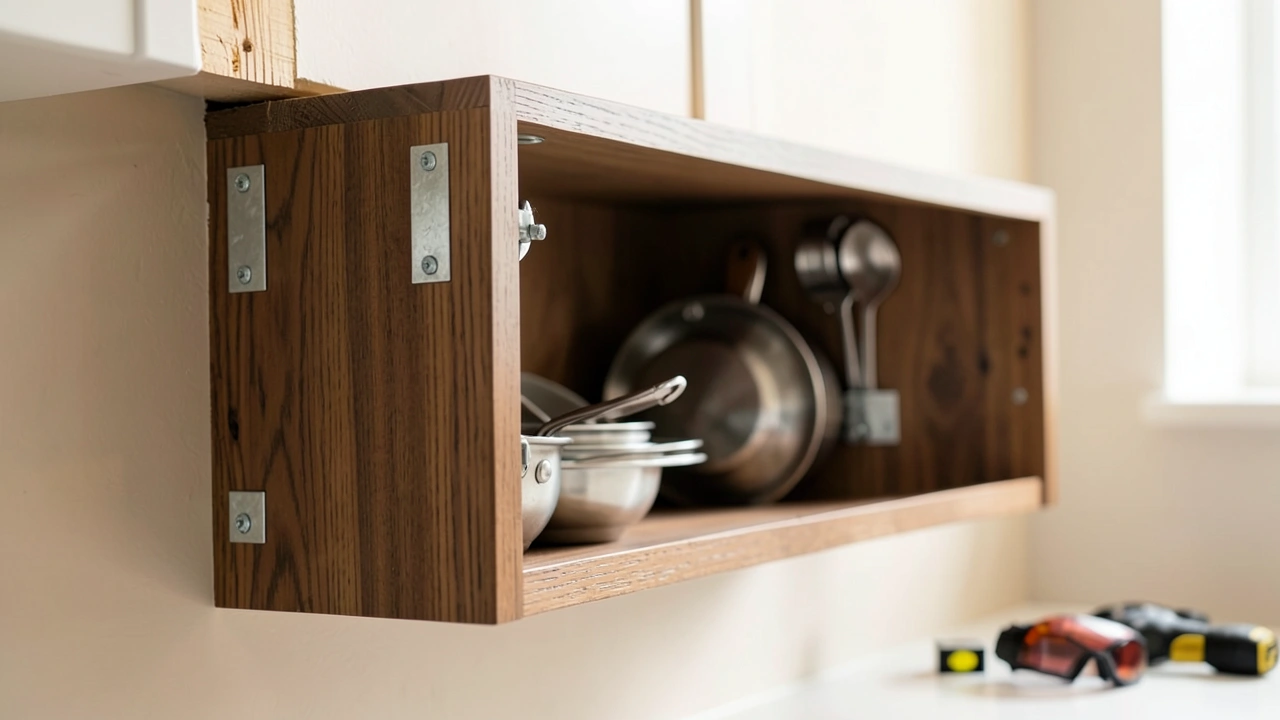
Hanging heavy kitchen cabinets can feel like a big job, especially if you’re new to this kind of project. It’s totally normal to feel a little unsure about How to Secure Heavy Kitchen Cabinets Properly. You want them to stay put and be safe, right?
Don’t worry! We’re going to walk through this step-by-step. We’ll make it easy to follow so you can get it done right.
Let’s find out what you need to know to get those cabinets secure and looking great.
Finding the Right Spots for Your Cabinets
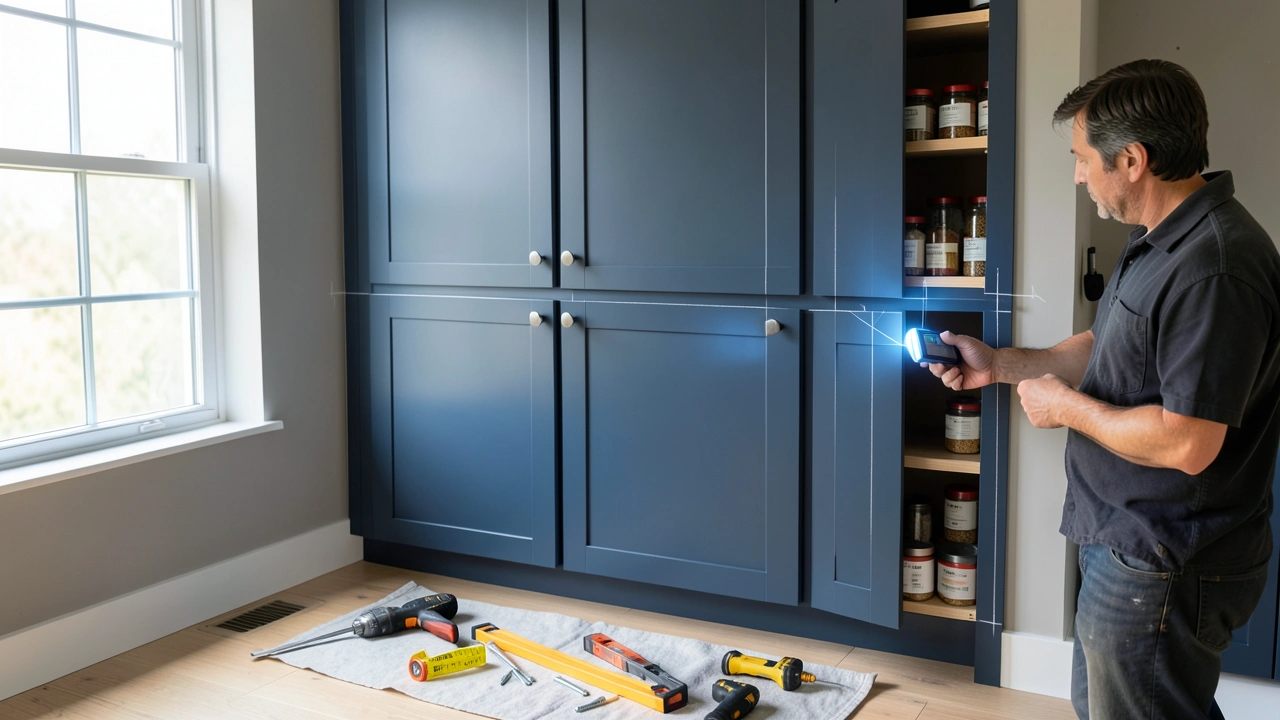
This part is all about knowing where your cabinets are going to live and making sure that spot is strong enough to hold them. We need to think about the wall itself and what’s inside it. This makes sure your cabinets are not just hung, but hung securely and safely.
We will cover how to find the studs, what kind of screws to use, and how to make sure everything is level.
Understanding Wall Structures
Walls are usually made of wood studs or metal studs, covered with drywall or plaster. Drywall alone is not strong enough to hold heavy cabinets by itself. You need to attach the cabinets to the studs, which are the vertical framing members inside the wall.
These studs provide the strength needed.
-
Wood Studs: These are the most common in homes. They are like the bones of your wall, providing solid support. You can usually find them by tapping on the wall; it sounds more solid when you tap over a stud. They are typically spaced 16 or 24 inches apart.
Finding wood studs is key to hanging cabinets. You can use a stud finder, which is a tool that detects changes in wall density. Another way is to look for nail pops or electrical outlets, as these are usually placed on or near studs.
-
Metal Studs: These are used more often in commercial buildings but can also be found in some homes. They are lighter than wood and can be harder to screw into. You’ll need special screws designed for metal studs.
If you have metal studs, your regular drywall screws won’t work. You’ll need self-tapping metal screws. These screws have a drill bit tip that can create their own hole in the metal.
A stud finder can also locate metal studs, though it might sound slightly different than when it finds wood.
-
Drywall Thickness and Type: The thickness of your drywall can affect how well screws hold. Standard drywall is about 1/2 inch thick. Thicker drywall might need longer screws.
Knowing your drywall type is important for screw selection. If you have plaster walls, they can be trickier and sometimes hide a wood lath backing. If you’re unsure, it’s best to test a small, inconspicuous area.
Using a Stud Finder
A stud finder is a really helpful tool. It uses sensors to detect the studs inside your walls. There are different types, including magnetic, electronic, and radar.
-
Electronic Stud Finders: These are the most common for home use. They have sensors that detect changes in density as you move them across the wall. When they find a stud, they usually beep or light up.
To use an electronic stud finder effectively, you need to calibrate it correctly. Place it on the wall and press the button. Wait for it to signal that it’s ready.
Then, slide it slowly across the wall. Mark the edges of the stud where the tool indicates a change.
-
How to Mark Studs: Once your stud finder indicates a stud, mark the edges of where you think the stud is. Then, move the finder to the other side to find the other edge. The center of the stud is usually between these two marks.
It’s a good idea to mark multiple studs to make sure you’ve found them correctly and to see the spacing. Sometimes, the finder might give a false reading, so confirming with a small pilot hole can be wise.
Identifying Different Wall Materials
Knowing what your wall is made of is essential. Most homes have drywall, but older homes might have plaster and lath. This affects how you hang things.
-
Drywall: This is the most common wall covering. It’s made of gypsum plaster pressed between two thick sheets of paper. It’s relatively easy to work with.
When attaching cabinets to drywall, you must hit a stud. Drywall alone cannot support the weight of cabinets, especially when they are filled with items. Using just drywall anchors will not be sufficient for heavy kitchen cabinets.
-
Plaster and Lath: Plaster walls are older and can be more challenging. They consist of a plaster coating applied over thin strips of wood called lath. These can be strong but also brittle.
If you have plaster and lath, finding studs can be harder. You might need to use a longer drill bit to go through the plaster and lath to reach the stud. Sometimes, the lath itself can offer some support, but it’s still best to secure to the studs.
Choosing the Right Hardware for Secure Hanging
Once you know where you’re going to hang your cabinets and what your wall is made of, the next big step is picking the right screws and mounting hardware. This is super important because these are the things that actually hold your cabinets up. Using the wrong hardware can lead to disaster.
Types of Screws
Not all screws are made the same. For hanging cabinets, you need strong screws that can handle a lot of weight. They need to go deep into the studs.
-
Cabinet Screws: These are specifically designed for hanging cabinets. They are strong and have a flat head that sits flush with the mounting surface. They are usually made of hardened steel.
Cabinet screws come in various lengths. The length you need depends on the thickness of your cabinet’s back panel, the drywall, and how far into the stud you need to go. A common size is 2 1/2 inches.
-
Wood Screws: While cabinet screws are best, strong wood screws can also work. Make sure they are sturdy and have a good thread. They should also have a flat or washer head.
When using wood screws, always pre-drill a pilot hole. This prevents the wood from splitting and makes it easier to drive the screw. The pilot hole should be slightly smaller than the screw’s diameter.
-
Lag Screws: For very heavy cabinets or when you want extra security, lag screws are a great option. These are heavy-duty screws that require a pre-drilled hole.
Lag screws are like bolts but have a screw thread. You’ll need a wrench or socket to drive them into the wall. They offer superior holding power compared to standard screws.
Screw Length and Gauge
The length and thickness (gauge) of your screws are critical. They need to be long enough to go through the cabinet and drywall and securely into the stud.
-
Screw Length Calculation: A good rule is to have at least 1 1/4 inches of the screw embedded in the stud. So, if your cabinet back is 3/4 inch thick and your drywall is 1/2 inch thick, you’ll need a screw at least 2 1/2 inches long (3/4 + 1/2 + 1 1/4 = 2 1/2).
It’s always better to go a little longer than too short. A screw that’s too short won’t grip the stud properly. However, screws that are too long can interfere with things inside the wall, like wiring or pipes, so measure carefully.
-
Screw Gauge: The gauge refers to the thickness of the screw. For cabinets, a thicker gauge screw (like a #8 or #10) provides more strength.
A thicker screw can handle more shear force and tension. This is especially important for cabinets that will hold heavy items like dishes or appliances. Always check the weight rating of the hardware if it’s available.
Using Washers
Washers are small metal rings that go under the head of a screw or bolt. They help to spread the weight over a larger area and prevent the screw head from digging into the cabinet material.
-
Flat Washers: These are the most common type. They provide a flat surface for the screw head to rest against.
When securing heavy cabinets, using washers with your screws is a simple step that adds a lot of stability. It prevents the screw head from pulling through the cabinet’s mounting strip.
-
When to Use Washers: Always use washers with lag screws. For cabinet screws, they are highly recommended, especially if the cabinet material is soft or if you’re using a screw with a smaller head.
Imagine a heavy cabinet trying to pull away from the wall. The washer helps distribute that force across a wider area of the cabinet’s frame, reducing the chance of damage or failure.
Specialty Hardware
Sometimes, you might encounter situations where standard screws aren’t enough. This is where specialty hardware comes in handy.
-
Mounting Plates: These are metal plates that attach to the wall studs. The cabinet then hangs on these plates, providing a very strong connection.
Mounting plates are an excellent option for very heavy or custom cabinets. They offer multiple screw points into the studs, distributing the weight more evenly.
-
French Cleats: A French cleat is a system made of two interlocking angled pieces of wood or metal. One piece attaches to the wall, and the other attaches to the cabinet.
This system is very strong and makes it easy to hang cabinets precisely. The interlocking angle provides a secure hold. It’s a popular choice for heavy items like large wall-mounted TVs or substantial shelving units.
The Process of Securing Heavy Cabinets
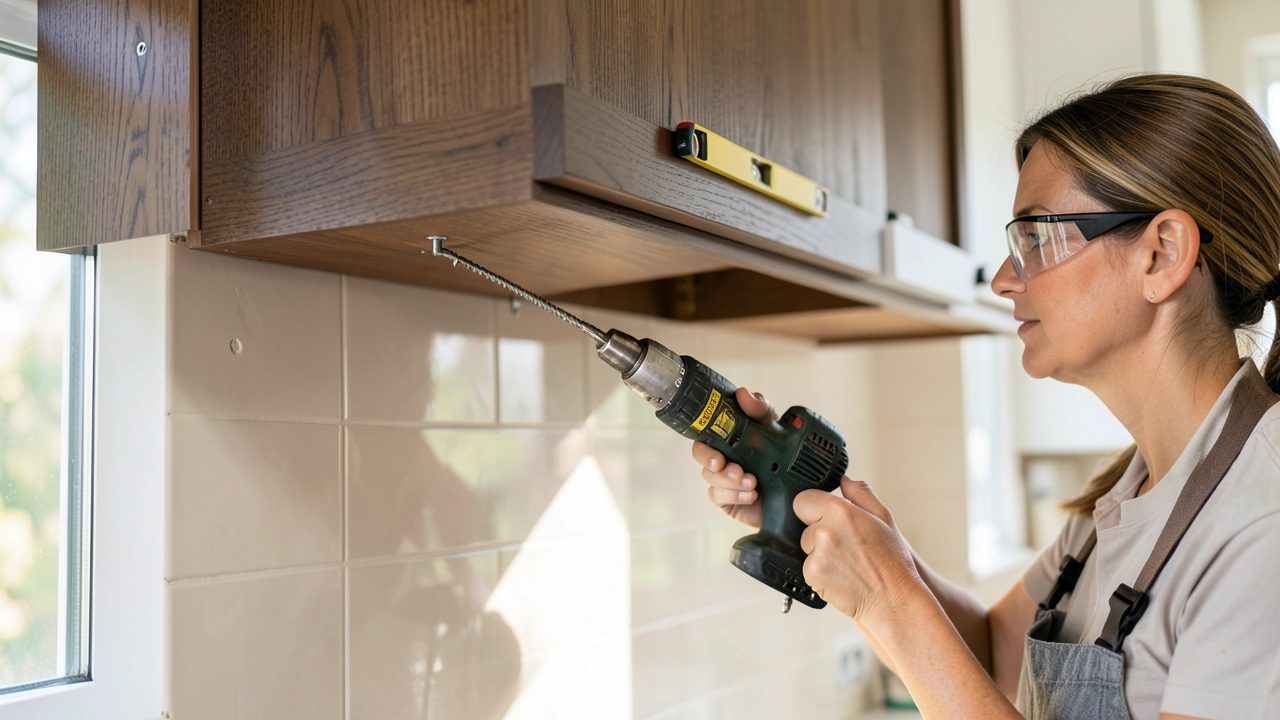
Now that you know about the tools and hardware, let’s get down to the actual hanging process. This is where you put it all together. Taking your time and being careful here will pay off in the long run by ensuring your cabinets are safe and stable.
Locating Studs Accurately
Before you even think about drilling, you need to be sure where those studs are. Double-checking your stud finder marks is a smart move.
-
Pilot Holes: Drill a small pilot hole (about 1/8 inch) where you marked the center of a stud. If you hit solid wood and the drill bit feels resistance, you’ve likely found a stud.
If you hit nothing or the bit goes through easily, you’ve missed the stud. Move over slightly and try again. This step is crucial for accuracy.
-
Confirming Location: It’s a good idea to confirm the location of at least two studs before you start hanging. This helps ensure your marks are correct.
When you’re hanging a cabinet, you’ll want to hit at least two studs if possible. Many standard kitchen cabinets are 24, 30, or 36 inches wide, which often allows for securing into two studs.
Marking and Leveling
Getting your marks right and ensuring your cabinets are level is vital for both looks and function.
-
Using a Level: Place your level on top of the cabinet (or on a straight edge placed on top) to ensure it’s perfectly horizontal.
A level cabinet looks professional and ensures that doors and drawers will operate correctly. There are different types of levels, including spirit levels and laser levels.
-
Marking the Height: Decide on the exact height for your cabinets. Use a pencil and your level to draw a faint horizontal line on the wall where the top or bottom of the cabinet will sit.
This line acts as a guide. For upper cabinets, a common spacing between the countertop and the bottom of the cabinet is 18 inches. For base cabinets, they usually sit directly on the floor or on a leveled base.
Attaching the Cabinets
This is the moment of truth – securing the cabinets to the wall.
-
Pre-drilling Cabinet Holes: Before you hang the cabinet, drill pilot holes through the cabinet’s back or mounting rail. Make sure these holes are positioned where you’ve marked the studs.
This makes it easier to drive the screws and prevents the wood of the cabinet from splitting. The size of the pilot hole should be slightly smaller than the diameter of your screws.
-
Driving the Screws: With the cabinet held in place (you might need help for this!), drive the screws through the pre-drilled holes in the cabinet and into the wall studs. Use a power drill or a screwdriver.
Ensure the screws are snug but don’t overtighten them, which could strip the threads or damage the cabinet. Make sure the cabinet is firmly pulled against the wall.
-
Using Cabinet Mounting Hardware: Many cabinets have a sturdy mounting rail at the top and bottom of the back. This is where you should drive your screws. If not, look for solid wood framing within the cabinet.
These mounting rails are specifically designed to bear the weight and provide a solid point of attachment to the wall. Always aim for these if they are present on your cabinets.
Example Scenario: Hanging a Heavy Wall Cabinet
Let’s say you have a large, heavy wall cabinet filled with dishes.
- You’ve found the studs behind the drywall using a stud finder. They are 16 inches apart.
- You’ve marked the center of two studs where the cabinet will go. You decide on a height and draw a level line on the wall.
- You’ve pre-drilled holes through the cabinet’s mounting rail, making sure they line up with your stud marks. You’re using 2 1/2 inch cabinet screws.
- With a helper holding the cabinet against the wall and perfectly level, you drive the screws through the cabinet rail and into the studs. You feel a firm resistance as the screws go deep into the wood.
- You test the cabinet by giving it a gentle pull to ensure it’s completely secure.
Reinforcing and Safety Checks
Once your cabinets are up, it’s not quite over. You need to double-check everything and make sure it’s safe for the long haul. This final step gives you peace of mind.
Checking for Stability
Give your cabinets a good shake. They shouldn’t budge.
-
The Wobble Test: Gently push and pull on the cabinets. If they move more than a tiny bit, you need to add more screws or check your existing ones.
This test is critical. A cabinet that wobbles is a cabinet that isn’t safely secured. It’s better to find out now than have it cause a problem later.
-
Weight Distribution: Think about what you’ll put inside. Spread heavier items evenly.
Avoid overloading one side of a cabinet. This can put uneven stress on the mounting system. Planning where your heaviest items will go can help with placement.
Using Wall Anchors (When Studs Aren’t Enough)
In some rare cases, you might not be able to hit enough studs. This is where heavy-duty wall anchors can be a last resort, but they are NOT a primary solution for heavy cabinets.
-
Toggle Bolts: These are strong anchors that expand behind the drywall. They are suitable for moderate weight but still not ideal for extremely heavy loads without stud support.
Toggle bolts work by having a spring-loaded mechanism that flips open behind the drywall. You need a larger hole for these, but they can hold more weight than standard screw-in anchors.
-
Heavy-Duty Anchors: Look for anchors specifically rated for high weight capacities. Always follow the manufacturer’s instructions precisely.
It’s important to check the weight rating on any anchor you consider using. For kitchen cabinets, which can hold a lot of weight, relying solely on anchors is generally not recommended. Studs are always the preferred method.
Professional Advice
If you’re ever in doubt, it’s wise to ask a professional. A carpenter or handyman can ensure the job is done right.
-
When to Call a Pro: If your walls are made of unusual materials, if you can’t find studs, or if the cabinets are exceptionally heavy (like custom-made solid wood units), consider hiring someone.
Professionals have the experience and tools to handle challenging situations. They can also spot potential issues you might miss.
-
Cost vs. Safety: While hiring a pro costs money, it’s a small price to pay for safety and peace of mind.
A poorly hung cabinet can cause damage to your home and even injure someone. Investing in professional installation for a critical job like this is often a smart choice.
Frequently Asked Questions
Question: What are the best screws for hanging heavy kitchen cabinets?
Answer: The best screws are strong, hardened steel cabinet screws that are at least 2 1/2 inches long. You need them to go through the cabinet’s mounting rail, the drywall, and at least 1 1/4 inches into a solid wood stud.
Question: Can I hang cabinets on drywall alone?
Answer: No, you absolutely cannot hang heavy kitchen cabinets on drywall alone. Drywall is not strong enough. You must attach cabinets directly to the wall studs for secure mounting.
Question: How do I find wall studs if I don’t have a stud finder?
Answer: You can try tapping on the wall; studs sound more solid. Look for nail heads or seams in the drywall, as these are often near studs. You can also drill small test holes to find them.
Question: How far apart should my cabinet screws be?
Answer: You should place screws at every stud location where the cabinet is attached. For a typical cabinet, this means at least two screws, possibly more for wider cabinets, driven into solid studs.
Question: What if the studs aren’t in the perfect spot for my cabinets?
Answer: You may need to install blocking between the studs or use a specialized mounting system like a French cleat that attaches to multiple studs. For heavy cabinets, it’s always best to hit the studs.
Final Thoughts
Securing heavy kitchen cabinets properly is all about finding your studs and using strong hardware. By following these simple steps, you can make sure your cabinets are safe and stable for years. Always prioritize a secure connection to the wall’s structure.
You’ve got this!

Leave a Reply